W
From China
Tokyo-Takadanobaba Campus
Ritsumeikan University
Accepted into the College of Global Liberal Arts
- Why did you choose to study in Japan?
- My name is W, and I graduated from ISI's Takadanobaba Campus in September 2023. I am currently studying in the College of Global Liberal Arts at Ritsumeikan University.
To be honest, I chose to study abroad because university entrance competition in China was extremely intense. For a student with average academic performance like me, it was difficult to gain admission to my preferred university in such a highly competitive environment. Rather than following the single path of the national college entrance exam, I decided to study abroad because I wanted to build my own value and create opportunities for myself overseas.
My decision to study in Japan was also somewhat coincidental. During Shanghai's lockdown last year, I came across a YouTuber's video introducing travel in Japan, and I found it very appealing. Through the video, I learned about many of Japan's tourist destinations and public transportation systems, as well as its craftsmanship and corporate culture. It made me want to study in Japan and experience these things for myself. - Why did you choose ISI Japanese Language School?
- When studying in Japan, the first challenge is overcoming the language barrier. Although it is possible to study Japanese in China, I thought I would be able to learn it more quickly in Japan, where I would have many opportunities to use the language in everyday life. So I decided to attend a Japanese language school in Japan first.
Among Japanese language schools in Tokyo, ISI's Takadanobaba Campus has an excellent reputation. It offers courses tailored to a wide range of Japanese proficiency levels, including an advanced class for students who want to progress at a faster pace. Compared with other Japanese language schools, ISI attracts students from a greater variety of cultural backgrounds. I chose ISI because I felt it was an ideal place to develop my abilities and engage in cross-cultural exchange. - Is there a memorable experience from your time at ISI?
- Since I had planned from the beginning to apply to an SGU, I started preparing my university applications as soon as I entered language school. One of the required application documents was a letter of recommendation. My homeroom teacher at the time, Ms. Murata, often stayed after school to meet with me, offering thoughtful advice and guidance. I am sincerely grateful to her for dedicating so much of her time, even after classes, to support me with such attentive and personalized guidance.
- Could you tell us about the university you are currently attending and what you are studying there?
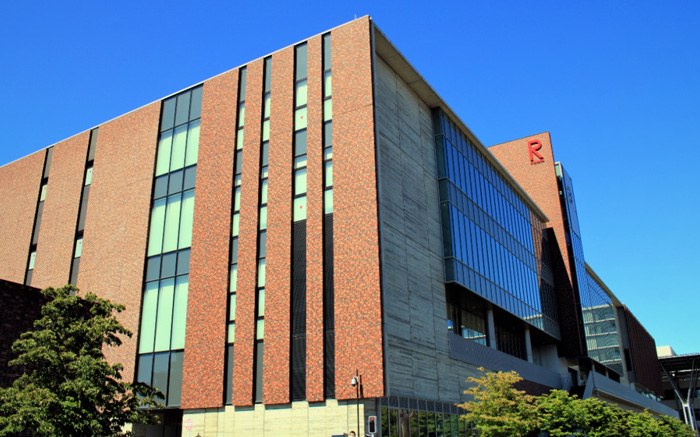
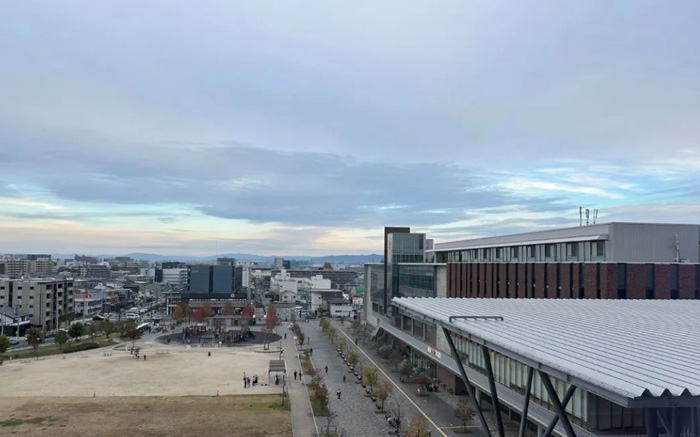
- Ritsumeikan University, where I currently study, is a well-known private university in the Kansai region and is also highly competitive. The College of Global Liberal Arts, which I belong to, was established in 2019 and is located at the Osaka Ibaraki Campus. It is one of the university's newer colleges. During its first four years, the college has continued to learn through trial and error while working to create a better academic environment for its students.
The College of Global Liberal Arts offers a diverse curriculum that includes international relations and intercultural communication. The student body includes not only Japanese students but also many international students from East Asia, Southeast Asia, Europe, the United States, and other regions.
My immediate impression is that the university has a very open atmosphere, with active communication between professors and students during class. Classes are conducted in English, and students are required to submit reports and complete project assignments outside class. It has been about a month since I enrolled, and my three required courses are Research Methodology, Critical Thinking, and English Writing. Of the electives I am currently taking, my favorite is Career Design. Unlike career counseling offered in the fourth year, this course helps students develop perspectives for designing and managing their futures more effectively by analyzing their own past experiences and those of others.
In my third year, I will study at the Australian National University (ANU) for one year and learn about the Asia-Pacific region. I will then return to Japan for my fourth year. Upon graduation, I will receive dual degrees from Ritsumeikan University and the Australian National University. This type of program is relatively rare in Japan and is the greatest appeal of the course. - Could you tell us about your university application process?
- Initially, I applied to the English-taught SGU programs at four universities: the College of Global Liberal Arts at Ritsumeikan University, the School of International Liberal Studies at Waseda University, the Faculty of Global Management at Chuo University, and the Faculty of Sustainability Studies at Hosei University. I was ultimately accepted by Ritsumeikan University and Chuo University. Ritsumeikan's program was more appealing to me because it offered a dual-degree course with the opportunity to study in Australia, so I ultimately chose Ritsumeikan University.
The SGU admissions process at each university I applied to consisted of submitting documents and completing an online interview in English. Most of the application materials were in English, and I also wrote my statement of purpose in English myself. There was no written examination. Since many applicants were applying from overseas, the interviews could be conducted online. It seems that most universities use interviews to assess applicants' English proficiency and general aptitude in order to maintain the quality of their student body.
The requirements vary by university. At Ritsumeikan University, applicants may be admitted with an IELTS score of 6.0 to 7.0 or a TOEFL score of around 80. Waseda University generally requires a TOEFL score of around 90. For details, please refer to each university's application guidelines for the relevant year.
I took Ritsumeikan University's entrance examination in February or March of this year, received the results in April, and enrolled in October. Since there was a six-month gap in between, I continued studying Japanese at language school. Although I applied to an English-taught program, during those six months I was also able to learn about and experience the application process and preparation methods for Japanese-taught programs.
I believe the most important part of preparing for university admission is your own effort. The teachers at language school provide students with a wide range of guidance, but ultimately, each student is responsible for preparing for further education. It is essential to carefully read the application guidelines yourself, attend university information sessions, and develop a solid plan for each stage of the admissions process. - Could you tell us about ISI's university guidance and support?
- ISI offers a well-structured university guidance program. The one-on-one support provided by my homeroom teacher was especially helpful to me. My teacher offered personalized guidance tailored to each student's abilities and individual circumstances, assisting with application essays, interview preparation, and other aspects of the admissions process. In addition, the school regularly holds university information sessions and has a dedicated Career and University Guidance Center. I am sincerely grateful for the support of all the teachers.
- What are your plans after graduating from university?
- After graduating from university, I plan to work in Japan. I am currently considering foreign-affiliated companies in Japan. As a member of a company, I hope to contribute to society.
- Please share a message for future international students.
- For those considering further education or employment in Japan, I believe it is important to think carefully in advance about what you want to learn, what you want to research, or what you want to do. In particular, those hoping to enter a university or graduate school should look beyond the ranking or reputation of their preferred school and ask themselves, “What do I truly want to study or research?”
Once you have found a clear answer of your own, decide which school to choose. Only when your goals are clear can you present your true self in documents such as your statement of purpose. Doing so will not only increase your chances of being accepted, but will also help you adjust smoothly to university life after enrollment. Best of luck to everyone!