![ISI Japanese Language School [Official]](https://www.isi-education.com/wp/wp-content/uploads/2026/06/logo_isi_wh.svg)


"Through Japanese language education, I find it appealing to be able to learn about the cultures and languages of many countries."
I think these are things that are not easily achieved in ordinary life. Through Japanese language classes, we can share various cultures with the whole class, and I feel that the time spent surprising and laughing with the students is enjoyable.
Q: What made you decide to become a Japanese language teacher, or to work at a Japanese language school?
During my high school years, I went on a study trip to America, where I interacted with students from a partner school. We primarily communicated in English, but I was happy to see them showing interest in Japanese culture and language, and trying to learn about it in a fun way.
Q: What do you find appealing or rewarding about working at a Japanese language school?
When I meet students I used to teach after a long time, and hear that they have become better at conversation or are excelling in other classes, I feel grateful that I tried to engage with them sincerely.
Also, when I hear voices at the end of the class expressing sadness and a desire not to be separated, it may be comments directed at their classmates rather than me, but I feel a sense of fulfillment in having created such a class.
Q: Do you have any memorable episodes involving students?
There are many memorable episodes, but I'll share one of them with you.
There was a student who, due to a delay in entering the country in April, started the beginner I class in May. Their grades didn't improve much, and they reluctantly had to retake the course in July. At the time, this student had difficulty with conversation and didn't leave a particularly strong impression on me.
After the April semester ended, I was no longer this student's homeroom teacher, but in August, when we passed each other in the hallway, he greeted me. I was surprised at how much his conversational skills had improved, and I discovered then that he was also very good at speeches and essays. I hadn't seen his potential in the April semester and didn't have a very good impression of him, but the student hadn't forgotten me and had been diligently studying Japanese. I was impressed by how much his Japanese had improved, and I was also happy that he remembered me. From this experience, I learned that it's difficult to truly understand a student in just three months, but I should try to get to know them better through more interaction and make sure that the potential they possess is not wasted.

Q: What do you value most in your classes?
I strive to create a classroom environment where students can participate with peace of mind. While some students do not particularly resist speaking up during class, I believe there are also quite a few who do feel hesitant. I can relate to these feelings, as I lost confidence in speaking up during class since high school. However, as a teacher, I want to encourage those students who are present at school to speak up and engage actively. Therefore, when I want them to speak, I frequently set aside time for students to consult with those nearby, and while I am circulating around the classroom, I make it a point to praise students' opinions and say things like, 'Please share that later.' I am not yet sure if these strategies are truly effective, but I am mindful of them in my own classes.
Q: What's the atmosphere like in your class or workplace?
In the intermediate II multicultural class, many students are seated together by nationality, but even when the seats are shuffled for activities, they communicate amicably in Japanese.
Since the workplace has a free-address system, I can communicate with various teachers every day. Not only about classes and lessons, but during breaks, we can talk about various things and have fun.
Q: What do you feel is the appeal of ISI Japanese Language School?
I believe there are many students and teachers. Since there are truly a variety of students, I think the resources for addressing student needs will greatly increase. Additionally, with many teachers present, I can observe a lot of different classes as part of my routine, which will also help me expand my teaching strategies.
Q: Please share a message for students who will be coming to study abroad in Japan.
A new life is beginning, and I think there are many things that may cause anxiety. However, you will surely meet friends with whom you can share both your worries and the fun times. We teachers also want to provide as much support as possible to help you achieve your dreams. Let's do our best together!
Read More Staff Interviews
-
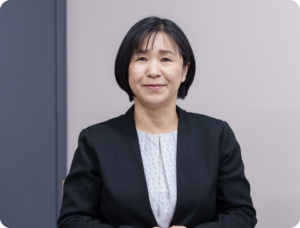 Kyoko Omi"What I love about Japanese language schools is being able to learn and have fun alongside students from so many different countries."
Through classes and small everyday conversations, I naturally encounter the cultures and ways of thinking of the world, and my own world keeps expanding more and more.
Read Interview
But more than anything, what makes me truly happy is being able to watch, up close, as students grow little by little. Seeing them working hard always gives me energy too. -
 Saya Matsuura"Being able to support students who, despite different nationalities and backgrounds, share the same goal of wanting to learn in Japan."
In my daily front-desk work, I meet no shortage of students who come to consult with anxious expressions, unable to fully express themselves in Japanese yet.
Read Interview
Even when a student is at first unsure how to communicate what they want to say, by listening slowly and working through it together, I get to see them leave in the end with a smile, saying "thank you." Moments like that make me truly feel how important this work is.
I try every day to be someone students can rely on and feel at ease with. -
 Miwa Hasegawa"It started from my own experience learning a foreign language, which made me want to support others learning Japanese in the same way."
At a Japanese language school, I get to interact with learners from a wide variety of backgrounds. Watching their Japanese improve and seeing them go on to find jobs at companies they hoped to join, I feel not only that I'm supporting each student's growth, but that I'm contributing to Japanese society as well.
Read Interview -
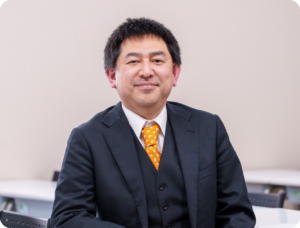 Yadomaru Yasushi"Being able to interact with people from many different countries."
There was a student whose Japanese ability wasn't very strong, but who carefully worked with me to properly write out their resume and practiced interviews many times, eventually landing a job at a well-known hotel.
Read Interview
I think that being honest and open to advice is what led to that job offer.



Our experienced counselors are here to guide you through every step, from choosing the right course to your move to Japan.