![ISI Japanese Language School [Official]](https://www.isi-education.com/wp/wp-content/uploads/2026/06/logo_isi_wh.svg)


"It started from my own experience learning a foreign language, which made me want to support others learning Japanese in the same way."
At a Japanese language school, I get to interact with learners from a wide variety of backgrounds. Watching their Japanese improve and seeing them go on to find jobs at companies they hoped to join, I feel not only that I'm supporting each student's growth, but that I'm contributing to Japanese society as well.
Q: What made you decide to become a Japanese language teacher, or to work at a Japanese language school?
I am not in a position to teach Japanese directly, but I believe that supporting students as an administrative office is also an important role. By creating a conducive learning environment and providing support so that students can learn with peace of mind, I think it will also lead to improvements in their Japanese language skills.
Q: Do you have any memorable episodes involving students?
At first, the student, who could hardly speak Japanese, became able to express their opinions clearly in Japanese and, together with a few other students who ran for positions, planned and managed a small event. The fact that I could share in their growth left a strong impression on me. We exchanged opinions in Japanese and spent hours discussing as we created the event together. The initiative and growth they showed during that process still resonate with me.
Q: What's the atmosphere like in your class or workplace?
The workplace has a friendly and open atmosphere where everyone can freely share their opinions. Even when faced with difficulties, there is an environment where one can easily consult with colleagues and superiors, allowing us to engage in our tasks with peace of mind.
Q: What do you feel is the appeal of ISI Japanese Language School?
The charm of our school lies in its clean and well-organized facilities and the international environment created by a diverse group of students. I feel that a significant feature is the ability to learn from each other while being inspired through interactions with students from various backgrounds.

Q: Please share a message for students who will be coming to study abroad in Japan.
I would be happy to support all of you as you take this new step in your life in Japan. If you have any questions or face any difficulties, please feel free to consult with the teachers at ISI at any time. Together, let’s work hard towards your goals.
Read More Staff Interviews
-
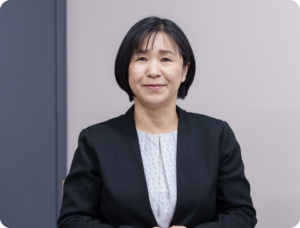 Kyoko Omi"What I love about Japanese language schools is being able to learn and have fun alongside students from so many different countries."
Through classes and small everyday conversations, I naturally encounter the cultures and ways of thinking of the world, and my own world keeps expanding more and more.
Read Interview
But more than anything, what makes me truly happy is being able to watch, up close, as students grow little by little. Seeing them working hard always gives me energy too. -
 Saya Matsuura"Being able to support students who, despite different nationalities and backgrounds, share the same goal of wanting to learn in Japan."
In my daily front-desk work, I meet no shortage of students who come to consult with anxious expressions, unable to fully express themselves in Japanese yet.
Read Interview
Even when a student is at first unsure how to communicate what they want to say, by listening slowly and working through it together, I get to see them leave in the end with a smile, saying "thank you." Moments like that make me truly feel how important this work is.
I try every day to be someone students can rely on and feel at ease with. -
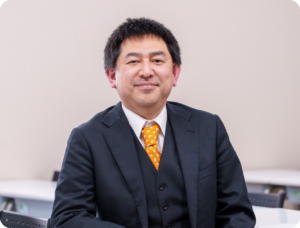 Yadomaru Yasushi"Being able to interact with people from many different countries."
There was a student whose Japanese ability wasn't very strong, but who carefully worked with me to properly write out their resume and practiced interviews many times, eventually landing a job at a well-known hotel.
Read Interview
I think that being honest and open to advice is what led to that job offer. -
 Yoshino Hoshi"My approach is to learn together with the students."
A student who enrolled in April and studied together with me starting from hiragana happily told me in January, "When someone from my own country came to my part-time job, I acted as an interpreter!" That memory has stuck with me. The fact that they understood enough Japanese to interpret, and that they went out of their way to come tell me about it, made me very happy.
Read Interview



Our experienced counselors are here to guide you through every step, from choosing the right course to your move to Japan.