![ISI Japanese Language School [Official]](https://www.isi-education.com/wp/wp-content/uploads/2026/06/logo_isi_wh.svg)

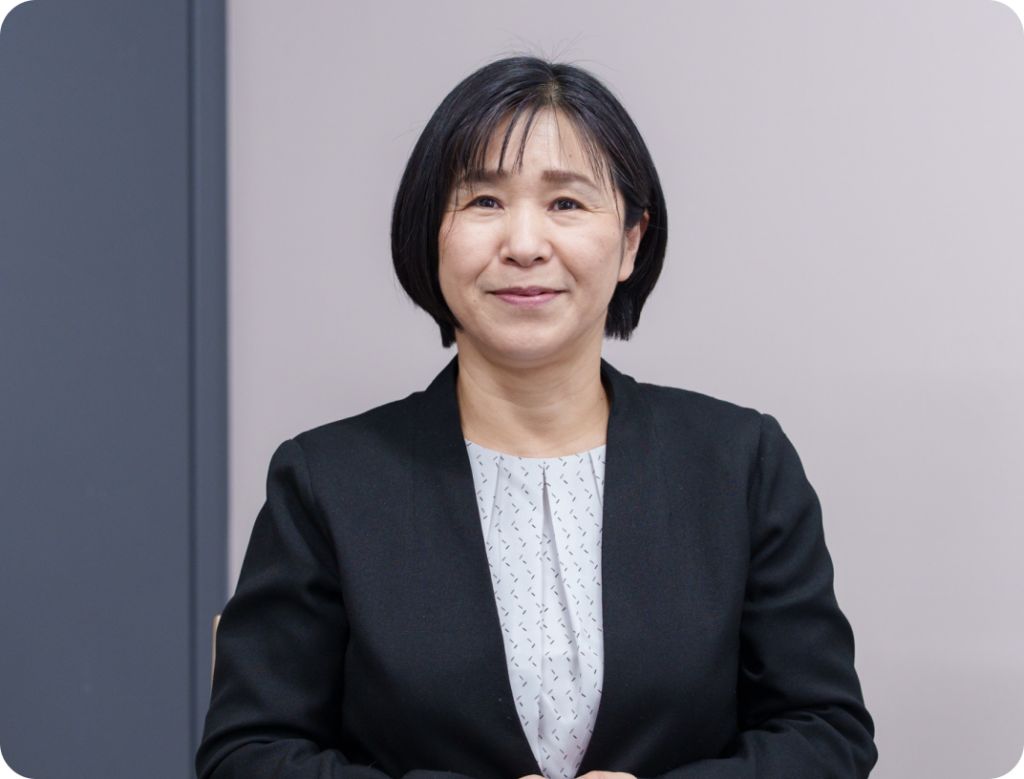
"What I love about Japanese language schools is being able to learn and have fun alongside students from so many different countries."
Through classes and small everyday conversations, I naturally encounter the cultures and ways of thinking of the world, and my own world keeps expanding more and more.
But more than anything, what makes me truly happy is being able to watch, up close, as students grow little by little. Seeing them working hard always gives me energy too.
Q: What made you decide to become a Japanese language teacher, or to work at a Japanese language school?
During high school, I experienced living abroad through an exchange program, and that led me to develop a desire to "do work connected to the world beyond Japan." After graduating from university, I worked at a travel company specializing in Europe, but most of the job involved communicating by email, and I felt I wanted to engage with people from other countries more directly.
When I took part in Japanese language education volunteering, I really felt the joy of connecting with people from other countries through Japanese, and that experience is what led me to choose the path of becoming a Japanese language teacher.
Q: What moments bring you joy or make teaching Japanese feel fun?
When I see a student who started from hiragana happily chatting in Japanese with classmates, I find myself quietly cheering, "Yes!" inside. And when students tell me after class that it was "fun" or "easy to understand," that makes me truly happy.
Q: Do you have any memorable episodes involving students?
A student who graduated and went on to their desired university came back to ISI's Career EXPO as a senior mentor. Watching them happily give advice to junior students about further education, I felt how much they had grown.
Even though time had passed since graduation, having them come back to ISI like that, and hearing them say "I'm glad I studied at ISI," made me truly happy.
Q: What do you value most in your classes?
In class, I try to create an atmosphere where students can speak actively without worrying about making mistakes. It's fine to make mistakes. I believe conversational ability grows more and more the more students speak.
Q: What's the atmosphere like in your class or workplace?
I teach both beginner and advanced-level classes.
In the beginner class, laughter is always breaking out during lessons, and it's a bright classroom full of smiles. Everyone uses the grammar they've learned to do interviews and give speeches with each other.
In the advanced class, students discuss a wide range of topics in Japanese, from social issues to dramas, anime, and job hunting. The students often know more about these topics than I do, so it's a fun class where we both get new discoveries and inspiration from each other.
Q: What do you feel is the appeal of ISI Japanese Language School?
I think the biggest appeal is having students of so many different nationalities. Students with a wide variety of backgrounds come together, sharing their cultures with each other as they learn happily. Even during class, there are discoveries that only happen because of this multinational mix, and the classroom is always bright and lively.

Q: Please share a message for students who will be coming to study abroad in Japan.
I'm so happy that all of you are interested in Japan. Japanese uses three writing systems, hiragana, katakana, and kanji, so it may feel difficult. But it's okay. Let's study together, one step at a time. I'll do my best too, so that each of you can achieve what you want to do in Japan.
I'm looking forward to meeting all of you in Japan.
Read More Staff Interviews
-
 Saya Matsuura"Being able to support students who, despite different nationalities and backgrounds, share the same goal of wanting to learn in Japan."
In my daily front-desk work, I meet no shortage of students who come to consult with anxious expressions, unable to fully express themselves in Japanese yet.
Read Interview
Even when a student is at first unsure how to communicate what they want to say, by listening slowly and working through it together, I get to see them leave in the end with a smile, saying "thank you." Moments like that make me truly feel how important this work is.
I try every day to be someone students can rely on and feel at ease with. -
 Miwa Hasegawa"It started from my own experience learning a foreign language, which made me want to support others learning Japanese in the same way."
At a Japanese language school, I get to interact with learners from a wide variety of backgrounds. Watching their Japanese improve and seeing them go on to find jobs at companies they hoped to join, I feel not only that I'm supporting each student's growth, but that I'm contributing to Japanese society as well.
Read Interview -
 Yadomaru Yasushi"Being able to interact with people from many different countries."
There was a student whose Japanese ability wasn't very strong, but who carefully worked with me to properly write out their resume and practiced interviews many times, eventually landing a job at a well-known hotel.
Read Interview
I think that being honest and open to advice is what led to that job offer. -
 Yoshino Hoshi"My approach is to learn together with the students."
A student who enrolled in April and studied together with me starting from hiragana happily told me in January, "When someone from my own country came to my part-time job, I acted as an interpreter!" That memory has stuck with me. The fact that they understood enough Japanese to interpret, and that they went out of their way to come tell me about it, made me very happy.
Read Interview



Our experienced counselors are here to guide you through every step, from choosing the right course to your move to Japan.