![ISI Japanese Language School [Official]](https://www.isi-education.com/wp/wp-content/uploads/2026/06/logo_isi_wh.svg)

2022.05.30 Update
How to start a new life in Japan under the best conditions!?
ISI Japanese Language School supports all the steps necessary for studying abroad in Japan.
From the initial consultation to the preparation of immigration documents and life after arriving in Japan, ISI provides support and offers a free counseling center to answer any questions regarding your objectives in Japan. However, there may be protocols that you need to handle on your own, such as reporting your address to the city hall and issuing commuter passes.
Address declaration to the city hall.
If you come to Japan and have a fixed residence or are staying in a serviced apartment where you can register that address as your residence, you must first go to the local government office to register your address. Typically, you should register your address at the city hall within 14 days of your arrival in Japan. To register your address, you need to go to the office with your passport and residence card, and fill out the form provided. At the end of the process, your address will be recorded on your resident record.
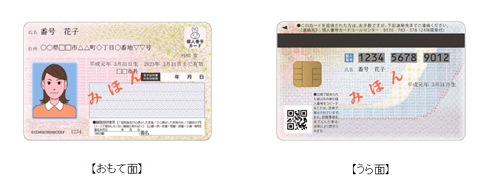
Additionally, there are questions about whether registration for Japan's National Health Insurance and a My Number Card are necessary.
When studying abroad in Japan, there are procedures that are not necessary when returning home. However, these processes are very important for establishing a long-term life in Japan. The personal number (My Number) is used in three areas: social insurance, taxes, and disaster response within Japan. After arriving in Japan, a 12-digit My Number is issued when creating the resident record for the first time. The personal number card has an expiration date, so if you do not complete the extension procedures at the municipal office within the validity period, it will become invalid. This card is very convenient for those who plan to receive money from Western Union or other remittance agencies in Japan. In that case, the My Number is required. Additionally, this card is useful when sending packages from convenience stores or when paying bills.
It was completed in three months.
Resident registration certificate
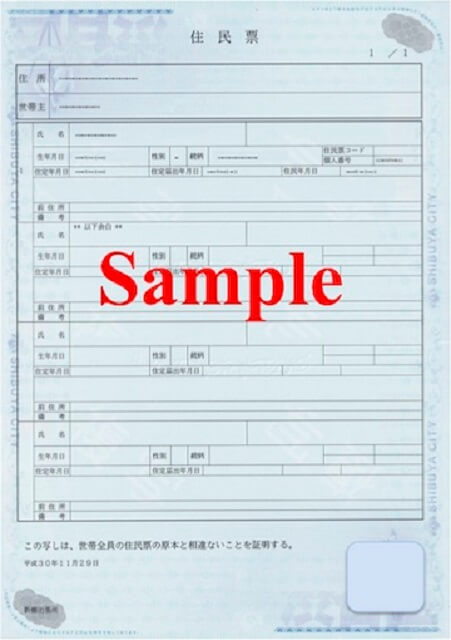
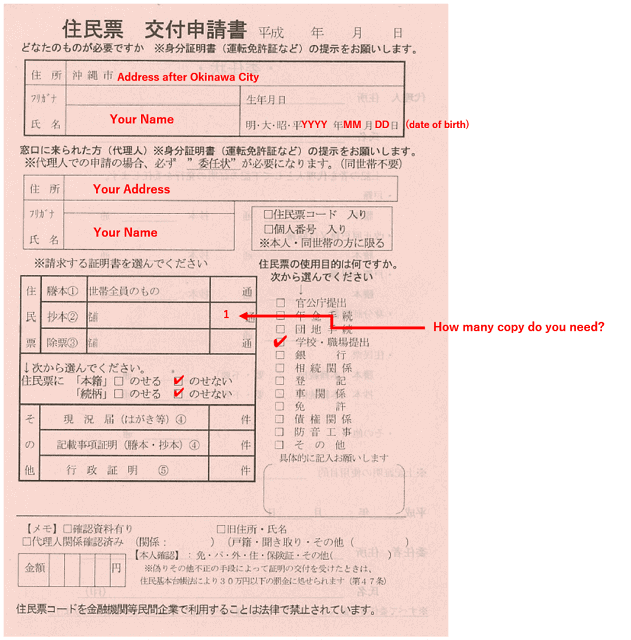
A resident record is a register of the current address managed by local governments in Japan. The basic resident register is a database that contains the resident records of all individuals, including their names, dates of birth, genders, addresses, and relationships to the head of the household.
Resident records must be requested at the same time as the address declaration procedure. It costs 300 yen, but it is very convenient, so be sure to keep it safe. Additionally, while waiting for the issuance of the My Number card, you can also ask at the city hall to "please write my number on the resident record."
National Health Insurance
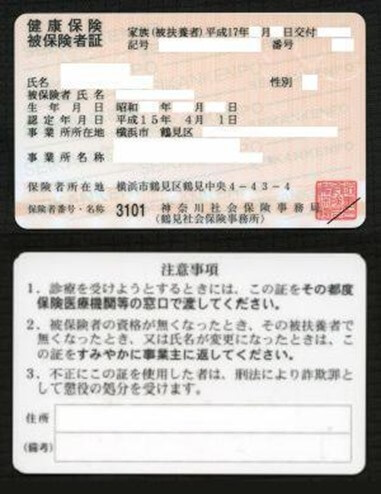
If you are planning to study abroad for more than three months, you must enroll in Japan's health insurance at your local ward or city office. At that time, please present your residence card and passport, and fill out the necessary information. Although there is a possibility of getting your money back when you return to your country after finishing your studies, all nationals must register for the National Health Insurance system. The immigration bureau is sensitive to whether you have paid taxes when renewing your visa or changing to a work visa. Medical expenses can be high. Therefore, enrollment in the National Health Insurance is mandatory. Once registration is complete, you must pay the insurance premium monthly or annually. The premium varies depending on your residence and income. In many cases, the insurance premium for international students in Japan is about 20,000 yen per year. By registering for the National Health Insurance, you only need to pay 30% of your medical expenses.
Additionally, it is strongly recommended to enroll in private insurance in your home country to prepare for unexpected expenses. In Japan, you must present a pink card at medical institutions. Medical care is well-developed in Japan, especially in major cities like Tokyo, Kyoto, and Nagano, so there is no need to worry.
By registering your address, obtaining a residence card, enrolling in health insurance, and having a My Number card issued, you will have completed the most significant tasks. Usually, this can be done all at once, but depending on the city office, it may take 2 to 3 hours.
After that, you need to open a bank account and obtain a Japanese phone number. For banks and phone numbers, you can use services from your home country. However, if possible, especially for those planning a long-term stay, I strongly recommend handling these procedures in Japan. This will make your life more comfortable.
A characteristic of the Japanese system is that to open a Japanese bank account, you need a Japanese phone number. However, to have a phone number, you need to contract a Japanese bank account. This may seem nonsensical at first, but it is possible to create one.
First, I recommend having a friend or a trusted person who has a Japanese phone number open a bank account for you. However, currently in Japan, there are companies that allow you to provide a Japanese phone number and deposit credit into a foreign bank account.
Japanese banks are generally reluctant to open bank accounts for foreigners and students. Most banks require proof that you have lived in Japan for more than six months before opening an account. For this reason, I strongly recommend opening an account at Japan Post Bank, which accepts foreigners.
Some city offices and Japan Post Banks offer services in English and other foreign languages. I recommend checking online in advance for places that provide foreign language services. For example, in Tokyo, you are more likely to find places offering foreign language services in urban areas like Shinjuku than in smaller regions.
Japan Post Bank
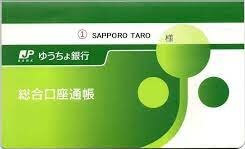
Payments for public utilities and salary transfers are all conducted through Japanese bank accounts.
Japan Post Bank is a subsidiary of Japan Post Holdings and handles mail delivery and banking services. Therefore, Japan Post Bank is often located in post offices across the country, with a total of 234 locations. It has become a practical and convenient option for many people.
When opening a bank account, bring your passport, residence card, and a seal (with your surname engraved). Obtain an application form at the counter and fill in the required information such as your name and address. In the next chapter, we will introduce the terms of the application form in both Japanese and English for your reference. On the official website of Japan Post Bank, you can create an application form step by step in languages such as English, Vietnamese, Chinese, and Korean. Once the account opening at Japan Post Bank is completed, a passbook will be handed to you at the counter. If you selected "passbook and card" in the cash service method section, you can make deposits and withdrawals with this passbook.
The ATM card will arrive at your address in about 1 to 2 weeks. It will be delivered in person rather than placed in your mailbox, so please ensure you are at home to receive it. If you are not at home, a "Delivery Failure Notification" will be left in your mailbox. Follow the instructions on the re-delivery notice to input your preferred re-delivery time. A postal worker will attempt re-delivery within the specified time.
In Japan, you can apply for many mobile payment applications such as LINE Pay, Pay Pay, and au Pay, which offer numerous discounts and coupons.
Japanese mobile phone companies
In Japan, there are many phone companies.
SoftBank, Rakuten Mobile, and Docomo, among others. All of them offer benefits for students and provide support in English and foreign languages. You can compare these services and choose the one you like.
Commuting and school regular pass
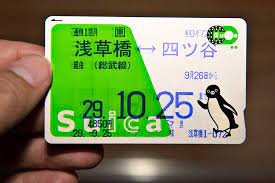
Depending on the campus, ISI has partnerships with several railway companies, allowing for reduced transportation costs from home to school. For more detailed information, please contact the information points at each school.
However, the railway companies offer a monthly pass. With this, you can enjoy unlimited train rides between home and school, covering all the stations in between.
Yay!
Now, you have registered at the city hall and obtained your residence card, health insurance card, and My Number card. You have opened a Japanese bank account and obtained a Japanese phone number and commuter pass. With this, you are ready for life in Japan. You will find that there are various ways to make your life more comfortable in Japan. If you have any questions, please ask at the school's information point, and we will assist you as much as possible. Our curriculum also teaches how to behave in Japanese society. You will learn everything about daily life, such as how to withdraw money, how to place an order at a restaurant, and how to ask for directions. All in Japanese, you will learn many grammatical points and vocabulary. While learning Japanese at ISI, you can also learn how to live in Japan.
I sincerely hope this blog helps you and that your new life in Japan starts in the best possible way.



Our experienced counselors are here to guide you through every step, from choosing the right course to your move to Japan.