![ISI Japanese Language School [Official]](https://www.isi-education.com/wp/wp-content/uploads/2026/06/logo_isi_wh.svg)

Overview of Nagano Business and Language College
School Overview
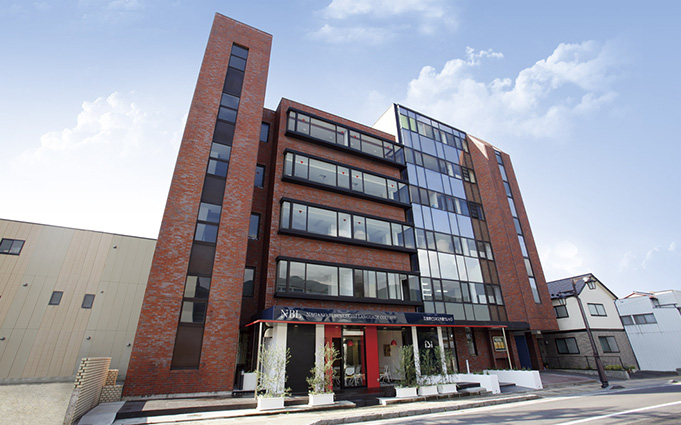
School Name
Nagano Business and Language College
School Location
3-5-18 Chuo, Ueda-shi, Nagano, 386-0012
Phone Number
0268-23-7220
Founding Body
Masakazu Ogino, Chairman of ISI Gakuen School Corporation.
Founding Body Address
34F Sumitomo Fudosan Shinjuku Grand Tower, 8-17-1 Nishi-Shinjuku, Shinjuku-ku, Tokyo,160-6134
Student Capacity
540 Students
Number of Students and Staff
Number of students: 540
Number of principal, vice-principal, and teachers: 37
Number of staff: 5
Educational Curriculum
| Feld | Course Name | Duration | Start | End | Total Study Hours |
Target Level |
Capacity |
Number of Classes | Students per Class |
| Study Abroad | 2 Year Academic Japanese Course | 2 Years | April | March | 1,600時間 | B2 | 360人 | 18 | 20人 |
| Study Abroad | 進学1年6カ月コース | 1 year and 6 months | October | March | 1,200時間 | B2 | 180人 | 9 | 20人 |
Class Content
Subjects and Their Content
| Level | Learning Objectives | |
| Beginner Level I | Reading Comprehension | Can read very short, simple sentences on everyday, familiar topics, written in hiragana, katakana, and basic kanji, taking basic expressions one at a time, sentence by sentence. |
| Listening Comprehension | Can understand and respond to simple exchanges, instructions, and questions that are spoken slowly and clearly in everyday situations. | |
| Writing | - Can fill out extremely short, simple procedural forms using hiragana, katakana, and everyday kanji. - Can write short phrases or sentences about themselves and family (age, hometown, address, occupation). |
|
| Presentation | - Can give a simple presentation about themselves or their family using basic vocabulary and grammar. | |
| Conversation | - Can exchange simple greetings. - Can answer or ask very simple personal questions and manage very short exchanges. |
|
| Basic Japanese | - Can understand basic Japanese. - Can engage in basic interactions to accomplish daily life tasks. - Becomes accustomed to tools like the LMS, builds preview/review habits, and begins studying autonomously. |
|
| Characters and Vocabulary | - Can use vocabulary related to familiar topics. - Can learn the formation of familiar kanji and make reasonable guesses at unfamiliar ones, continuing to study autonomously. |
|
| Learning Management |
Can think through their intended field and path, decide what/when/how to study toward their goals, plan and act on this, and use tools like portfolios and can-do checklists to reflect and revise, managing their learning autonomously. | |
| Beginner Level II | Reading Comprehension | - Aim to understand short and simple texts about everyday and familiar matters. - Can understand information (notices, postings, warnings) frequently encountered in everyday, familiar situations. - Can understand short, simple written correspondence. |
| Listening Comprehension | - Can generally understand simple announcements or conversations spoken slowly in everyday, familiar situations. | |
| Writing | - Can write sentences about daily life using hiragana, katakana, and basic kanji, along with simple facts about oneself. - Can fill in simple information such as name, nationality, and address on standard forms at hospitals and government offices. - Can string together simple phrases or sentences about various daily matters around oneself (school life, living environment, learning experiences, etc.). |
|
| Presentation | - Can give a presentation introducing themselves using simple expressions, including preferences, interests, and people close to them. | |
| Conversation | - Can engage in simple exchanges about themselves and their interests. - Can engage in simple exchanges involving invitations or suggestions, and can appropriately express agreement or disagreement with the other person's opinion. - Can exchange information on simple, everyday matters. |
|
| Basic Japanese | - Can understand basic Japanese. - Can carry out the exchanges needed to accomplish behavioral goals, and can handle everyday life tasks. - Can develop the habit of preparation and review, and acquire strategies for autonomous learning. - In addition to asking simple, everyday questions, can also receive questions and respond simply on the spot, or ask for clarification. |
|
| Characters and Vocabulary | - Can understand and use basic words necessary for achieving tasks in daily life, such as part-time jobs. - Can read and write basic kanji needed for daily life, albeit limited, and can express oneself appropriately according to the situation. |
|
| Learning Management |
- Can objectively assess their current level - Can create a plan to achieve goals. - Can independently progress in learning while reflecting on and adjusting their studies. |
|
| Intermediate I | Reading Comprehension | - Can read familiar and simple sentences and understand the subject. - Can read simple correspondence and informational texts and understand the facts and necessary information. |
| Listening Comprehension | - Can listen to a coherent talk on a familiar topic, spoken clearly in standard Japanese, and catch the main points. | |
| Writing | - Can write simple sentences by combining several elements related to familiar topics into a single flow. - Can describe in detail about familiar topics of personal interest. |
|
| Presentation | - Can give a brief, somewhat extended presentation on their own experiences or events, focused on facts. | |
| Conversation | - Can convey facts or respond to questions politely regarding familiar topics. | |
| Applied Japanese | - Can understand Japanese used in everyday situations to a certain extent. - Can use slightly more difficult Japanese expressions seen in daily life by employing paraphrasing. - Understands the meaning, form, and readings of familiar kanji vocabulary and idiomatic expressions at the N3 level, and can write short sentences. - Can engage in conversations about familiar topics encountered in school or the community, asking questions and listening to simple explanations in standard language. |
|
| Learning Management |
- At term start, can objectively assess their current level, set term goals and strategies, and make a plan autonomously. - Students can share the goals they set using Japanese with each other. - After learning, in addition to self-reflection, students can conduct peer evaluations, allowing them to understand their own learning objectively and introspectively. |
|
| Intermediate II | Reading Comprehension | - Can understand the main topic, the writer's feelings, and an overview of the facts. - Can read simple correspondence or informational text and understand not only the necessary information but also an overview of the facts. |
| Listening Comprehension | - Can listen to a coherent explanation on a topic of interest spoken in standard Japanese, understand the main points, and list the important points.
- Can listen to familiar exchanges and understand the main points and key information. |
|
| Writing | - Can write compound sentences about familiar topics related to oneself, creating relatively coherent texts. - Can write short texts (including communications such as emails) to explain everyday facts or reasons. |
|
| Presentation | - Can pay attention to social circumstances/issues, gather basic information, form an opinion, and present it. - Can present, with reasons, on their own experiences or events, and on hopes for after graduation. |
|
| Conversation | - Can participate in task-based discussion, simply conveying their opinion and responding politely to others' opinions. | |
| Applied Japanese | - Can understand Japanese used in everyday situations in detail. - Can use slightly more difficult Japanese expressions seen in daily life, employing paraphrasing and other techniques. - Can understand the meaning, form, and readings of familiar kanji vocabulary and idiomatic expressions at the N3 level, and can write short sentences. - By engaging with local people, can participate in society, learn about Japanese circumstances, and deepen understanding of the local community. |
|
| Learning Management |
- Can objectively assess their current level - Can create a plan to achieve goals. - Can independently progress in learning while reflecting on and adjusting their studies. |
|
| Elective Subjects | See below. | |
| Intermediate III | Reading Comprehension | - Can extract needed information from writing on daily life, their specialization, social topics, or areas of interest. - Can learn the structure of correspondence and gather information effectively. |
| Listening Comprehension | - Can listen to talks about daily life, specialized subjects, or social topics and understand the main points, provided they are in standard Japanese.
- In discussions within one's field of expertise, if spoken in a common language, one can grasp the key points whether the topics are abstract or concrete. |
|
| Writing | - Can write clear and detailed texts on various topics of interest. - Can think about paragraphs and structure for writing logical texts. |
|
| Presentation | - Can explain topics of personal interest (such as books, movies, or recent news) clearly and convey personal impressions and opinions in a presentation format. - Can organize thoughts and express them while considering a structure that is easy for the audience to understand. |
|
| Conversation | - Can smoothly and effectively give or conduct interviews.
- Can pick up on the other person's responses and, if necessary, change the prepared questions to create a flow suitable for the situation, drawing out interesting answers. - Can engage in appropriate exchanges using words suited to the relationship and age of the other person. |
|
| Applied Japanese | - In addition to understanding Japanese used in everyday situations, one can understand Japanese used in a wider range of contexts to some extent. - Can select appropriate sentence patterns to match the scene or situation, and use natural Japanese suited to that context. - Can understand the meaning, form, and reading of N2-level kanji vocabulary and idiomatic expressions needed for reading and writing in specialized studies and daily life, and can write somewhat complex sentences using them. - Can communicate appropriately while being considerate of the other person's culture, customs, and feelings. |
|
| Learning Management |
- Can objectively assess their current level - Can create a plan to achieve goals. - Can independently progress in learning while reflecting on and adjusting their studies. |
|
| Elective Subjects | See below. | |
| Advanced Level I | Reading Comprehension | - Can effectively read texts that include somewhat abstract content related to daily life, personal expertise, and social topics, as well as communications related to areas of interest to obtain necessary information. - Can read information, thoughts, and opinions from materials in one's field of expertise. - Can read communications, learn the format, and effectively gather information. |
| Listening Comprehension | - Can listen to talks about daily life, their field of specialization, or social topics and understand the main points, as well as follow long talks or the flow of complex discussions, provided they are in standard Japanese.
- In discussions within their field of specialization, can understand the main points of both abstract and concrete topics, provided they are spoken in standard Japanese. |
|
| Writing | - Can convey their own thinking on daily life, their specialization, or social topics, from their own specialized viewpoint, using appropriate vocabulary in a logical multi-paragraph piece. - Can write general inquiry letters related to their future path. |
|
| Presentation | - Can present clearly and in detail on a broad range of topics related to their interests. - Can perform the delivery skills needed for presentations. |
|
| Conversation | - Beyond everyday situations, can use appropriate expressions and vocabulary on somewhat broader topics, communicating accurately without causing misunderstanding, and correctly understanding and exchanging with others' opinions. | |
| Applied Japanese | - Beyond everyday Japanese, can understand Japanese used in a wider range of situations. Selects grammar appropriate to the situation and produces suitable expressions for the context. - Understands meaning/form/reading of N2-level, and some N1-level, kanji vocabulary and idioms needed for study or daily life, and can write simple sentences using them. - Can study efficiently by linking new material to what's already been learned. |
|
| Learning Management |
- Can objectively assess their current level - Can create a plan to achieve goals. - Can independently progress in learning while reflecting on and adjusting their studies. |
|
| Elective Subjects | See below. | |
| Advanced Level II | Reading Comprehension | - Can read somewhat complex texts related to daily life, personal expertise, and social topics. - Can effectively and accurately gather necessary information from somewhat complex texts. |
| Listening Comprehension | - Can catch the main points of talk on daily life, specialization, or society in standard Japanese, including the flow and gist of long or complex discussion. - Can understand the main points of complex lectures, talks, reports, and specialized presentations. |
|
| Writing | - Can convey their own thoughts in logical, multi-paragraph writing, using appropriate vocabulary from the perspective of their specialization, on topics related to daily life, their field, or social issues. - Can write text to consult about their own circumstances regarding academic advancement. |
|
| Presentation | - Can examine a current-affairs topic of interest from multiple angles, organize their thinking, and present it clearly to the listener, explaining with the listener's understanding in mind. | |
| Conversation | - Can effectively and fluently exchange thoughts on a wide range of topics, using appropriate words and expressions, including details, in a natural manner. | |
| Applied Japanese | - Can understand Japanese used in a wide range of situations (daily life, career activities, educational institutions, etc.). - Can select appropriate sentence patterns according to the situation and use natural Japanese suitable for that context. - Can understand the meaning, form, and readings of N1 level kanji vocabulary and idiomatic expressions necessary for specialized study and daily life, and can write simple sentences using them. - Can infer the meanings and usages of N1 level vocabulary while reading essays and short papers. - Can efficiently memorize and appropriately use Japanese by linking it with previously learned items during language use. - Can deepen understanding of society, be aware of involvement with the local community, and participate in society. |
|
| Learning Management |
- Can objectively assess their current level - Can create a plan to achieve goals. - Can independently progress in learning while reflecting on and adjusting their studies. |
|
| Elective Subjects | See below. | |
| Advanced Level III | Reading Comprehension | - Can read complex texts on topics of personal, professional, and social interest. - Can understand logical development from complex texts. - Can employ effective reading strategies to obtain necessary information. |
| Listening Comprehension | - Can catch the main points of complex lectures, talks, reports, and specialized presentations. - Can understand conversation between proficient Japanese speakers, provided slang or idioms are clarified. |
|
| Writing | - Can write a piece that clearly conveys their own views on daily life, specialization, or social topics, using appropriate vocabulary in a logical multi-paragraph piece. - Can write reports or essays considering the structure, developing arguments and points, assuming post-advancement in education. |
|
| Presentation | - Can organize and logically present their own opinions and thinking on their intended field of study or a social issue of interest, using materials and data appropriately to communicate clearly to the listener. | |
| Conversation | - On their intended field of study or a social issue of interest, can handle complex exchanges including slang and idioms, adjusting language and expression appropriately to the listener's understanding and relationship. | |
| Applied Japanese | - Can engage in language activities in a wide range of situations (daily life, career activities, educational institutions, etc.). - Can select appropriate sentence structures according to the situation and use natural Japanese suitable for that context. - In study and life situations at educational institutions, can understand the meaning, form, and readings of N1 level kanji vocabulary and idioms that are necessary for reading and writing, and can write simple sentences using them. - Can infer the meanings and usages of N1 level vocabulary while reading essays and short papers. - Can efficiently remember and appropriately use Japanese by linking it with previous learning items during language use. - Can deepen understanding of society, be aware of involvement with the local community, and participate in society. |
|
| Learning Management |
- Can objectively assess their current level. - Can create a plan to achieve goals and explain it to others. - Can reflect on learning objectively and progress autonomously while making corrections and adjustments. |
|
| Elective Subjects | See below. | |
Elective Subjects
| Level | Subject Name | Learning Objectives |
| Intermediate II Intermediate III Advanced I Advanced II Advanced III |
Preparation for the EJU | Builds long-passage reading comprehension, listening comprehension, and report/essay writing skills so students can attend lectures at Japanese universities and manage student life without difficulty. Understands the EJU's exam structure, question tendencies, and problem-solving strategies, reaching the level needed for further education. |
| JLPT Preparation (N3) | Understands everyday Japanese and can read/write simple conversation and text. Understands the JLPT N3 exam structure, tendencies, and strategies, reaching N3 passing level. |
|
| JLPT Preparation (N2) | Beyond everyday conversation, can catch the main points of exchanges in settings like university, the workplace, or entertainment. Can catch main points from newspaper articles and pamphlets. Reaches N2 passing level. |
|
| JLPT Preparation (N1) | Can catch main points of Japanese used in wide-ranging settings including business, and in opinion pieces or editorials. Can converse at a natural pace, including polite/honorific expressions. Reaches N1 passing level. |
|
| Conversation | Can communicate without difficulty in situations likely encountered during study-abroad life. Can accurately follow others' opinions on topics of interest and state their own logically. Can collaboratively plan, research, compile, and present results for an assigned task. | |
| Intermediate III Advanced I Advanced II Advanced III |
Career Planning | Beyond further education in Japan, understands the knowledge, research methods, and thinking needed for career design after completing their next program; can plan and carry out career-path activities autonomously. Can actively participate in Japanese society and be active across a wider range of settings. |
| Graduate School Preparation | School Prep (大学院対策)Can autonomously plan and carry out the language activities needed for graduate-school entrance exams (e.g. emailing a prospective supervising professor). Can anticipate the language activities their specialization will require and write a research proposal. |
Level-specific achievement targets
| Level | JLPT | Reference framework for Japanese language education |
Duration | Selection Class |
Attainment Goal | |
| Beginner | I | N5 | A1 | 6 months | – | - Can understand short, simple text encountered in everyday situations. - Can engage in very short conversations that are spoken slowly and clearly in everyday contexts. |
| Ⅱ | N4 | A2 | - Can understand short and simple texts about everyday and familiar matters. - Can appropriately use expressions that are commonly used in shopping and hobbies. |
|||
| Intermediate | Ⅰ | N3 | B1 | 9 months | – | - Can understand short and simple instructions heard in everyday situations such as school or part-time jobs. - Can convey personal experiences and events concisely. |
| Ⅱ | N3~N2 | B1 | 〇 | - On a social topic of interest, can understand the theme, the writer's feelings, and an overview of the facts, and present their own opinion. - Can extract needed information from simple correspondence/notices and produce a short, coherent text. |
||
| Ⅲ | N2 | B2 | - For text on their specialization or a social topic of interest, even somewhat abstract, can effectively extract needed information. - Can convey impressions/opinions in a well-structured piece, exchanging appropriately for the relationship. |
|||
| Advanced | Ⅰ | N2 | B2 | 9 months | 〇 | - Can effectively extract needed information from text on their intended field of study or a social issue. - In a multicultural setting, having accurately understood another's opinion, can convey their own thinking in a logical, multi-paragraph piece. |
| Ⅱ | N2~N1 | B2 | - Can effectively read necessary information from somewhat complex sentences regarding themes related to desired fields of study and social issues. - In a multicultural environment, can accurately understand the opinions of others and convey one's own thoughts in a logical text composed of multiple paragraphs, while being mindful of the other person's understanding. |
|||
| Ⅲ | N1 | B2 | - Can effectively extract the main content of complex text on both their field and a wide range of social issues. - Can accommodate slang/idioms from proficient speakers, and convey a persuasive, logical, multi-paragraph argument, adjusting to the other's understanding. |
|||
Cost
| Course Name | Duration | Application fee | Admission fee | Tuition | Materials | Facility and Management fees | Total | ||
| Students enrolled in the 2026 academic year. | 2 Year Academic Japanese Course | 2 Years | 33,000 | 77,000 | Year 1 | 620,000 | 44,000 | 60,000 | 1,599,000 |
| Year 2 | 640,000 | 55,000 | 70,000 | ||||||
| Total | 1,260,000 | 99,000 | 130,000 | ||||||
| 進学1年6カ月コース | 1 year and 6 months | 33,000 | 77,000 | Year 1 | 620,000 | 44,000 | 60,000 | 1,216,500 | |
| Year 2 | 320,000 | 27,500 | 35,000 | ||||||
| Total | 940,000 | 71,500 | 95,000 |
| Course Name | Duration | Application fee | Admission fee | Tuition | Materials | Facility and Management fees | Total | ||
| Students enrolled in the 2027 academic year. | 2 Year Academic Japanese Course | 2 Years | 40,000 | 100,000 | Year 1 | 640,000 | 55,000 | 70,000 | 1,670,000 |
| Year 2 | 640,000 | 55,000 | 70,000 | ||||||
| Total | 1,280,000 | 110,000 | 140,000 | ||||||
| 進学1年6カ月コース | 1 year and 6 months | 40,000 | 100,000 | Year 1 | 640,000 | 55,000 | 70,000 | 1,287,500 | |
| Year 2 | 320,000 | 27,500 | 35,000 | ||||||
| Total | 960,000 | 82,500 | 105,000 |
•These are fees for enrolling in the Further Education Course (20 lessons/week, 20 students per class).
•The application fee is paid at the time of application.
•Fees for external certification exams (various) are at the student's own cost.
•The facility and management fee includes student insurance premiums.
School Regulations
School Self-Inspection and Self-Evaluation Report
Japanese-Language Proficiency Attainment Status of Program Completers



Our experienced counselors are here to guide you through every step, from choosing the right course to your move to Japan.